Appendix 2
Supercontinents
Supercontinents form when most of Earth's landmasses gradually merge into one vast continent. This process is driven by plate tectonics, the large-scale movement of the Earth's lithospheric plates (the planet's outer shell). Over millions of years, these plates move in response to convection currents in the Earth's mantle, which causes them to collide, drift apart, or slide past each other.
When the plates carrying continental landmasses converge, they coalesce into a supercontinent. The collision of these plates often leads to the formation of mountain ranges, like the Himalayas today, which arose from the impact of the Indian and Eurasian plates.
After a supercontinent forms, the tectonic forces continue to act, leading to the eventual rifting or breaking apart of the supercontinent. This occurs when the plates are pulled apart, creating new oceans and separating the landmasses into distinct continents, as seen with the break-up of Pangaea into the continents we recognise today. The entire cycle of supercontinent formation and break-up, known as the supercontinent cycle, typically spans hundreds of millions of years and profoundly impacts Earth's climate, ocean circulation, and the distribution of ecosystems and species.
1. Vaalbara (3.6 to 2.8 billion years ago)
Vaalbara is hypothesised to be the earliest known supercontinent, forming around 3.6 billion years ago during the Archean Eon. Vaalbara's existence is inferred from the alignment of cratons in modern South Africa (Kaapvaal Craton) and Western Australia (Pilbara Craton). These ancient cratons have similar geological features, such as matching sedimentary and volcanic rock layers.
Though evidence for Vaalbara is indirect, geologists believe it was relatively small compared to later supercontinents. Its formation marked a significant milestone in Earth's geological history, representing one of the earliest large-scale aggregations of landmasses.
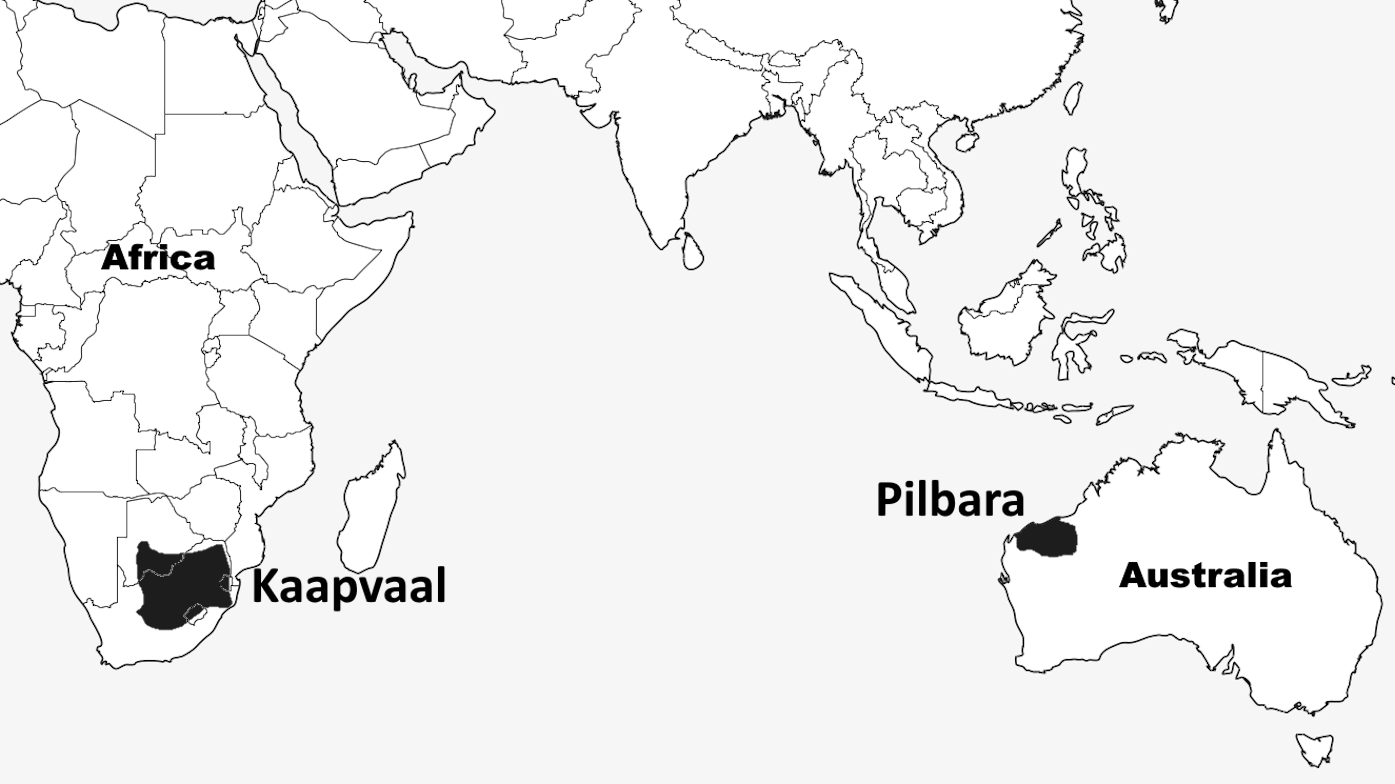
Figure A2‑1:Valbara consisted of the Kaapvaal and Pilbara cratons. While their combined land area is tiny compared with today's landmasses, Valbara ranks as a supercontinent because, at the time, it was the only continent in existence.
2. Ur (2.8 to 2.4 billion years ago)
Although sometimes debated whether it is a supercontinent in the true sense, Ur is often considered Earth's first long-lasting supercontinent, forming after the break-up of Vaalbara. Ur was about the size of Australia and consisted of parts of modern-day India, Western Australia, and Madagascar. Ur was part of multiple subsequent supercontinents, such as Kenorland and Pangaea, and later became part of the core regions of some modern continents, especially in Africa, India, Australia, and Antarctica.
3. Kenorland (2.7 to 2.1 billion years ago)
After Vaalbara and Ur, Kenorland emerged as a larger, more stable, and geologically complex super-continent. Forming around 2.7 billion years ago, it brought together cratons from North America, Greenland, Scandinavia, Siberia, and parts of Australia. The assembly of Kenorland was driven by widespread tectonic activity, including the creation of vast rift zones and volcanic activity, setting the stage for one of the most important geological events: the Great Oxidation Event
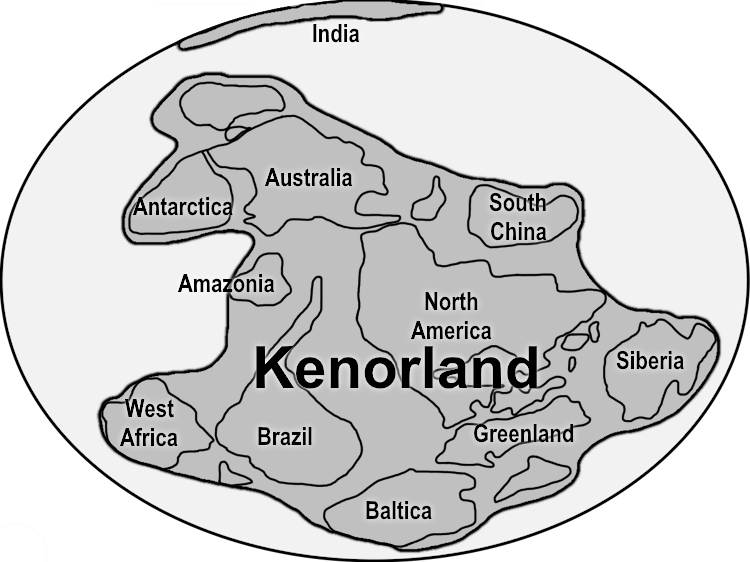
Figure A2‑2:A reconstruction of Kenorland. [Adapted from Marcelo Ferrando Castro (2018)].
Kenorland's break-up around 2.1 billion years ago initiated the Nuna or Columbia supercontinent cycle, highlighting the pattern of supercontinents forming and breaking apart over time.
4. Columbia, aka Nuna (1.8 to 1.3 billion years ago)
Columbia, also called Nuna, was one of the first "true" supercontinents in the modern sense, existing from about 1.8 billion to 1.3 billion years ago. It included most of the Earth's continental masses, such as the North American craton (Laurentia), Baltic regions, Siberia, and parts of India and South America.
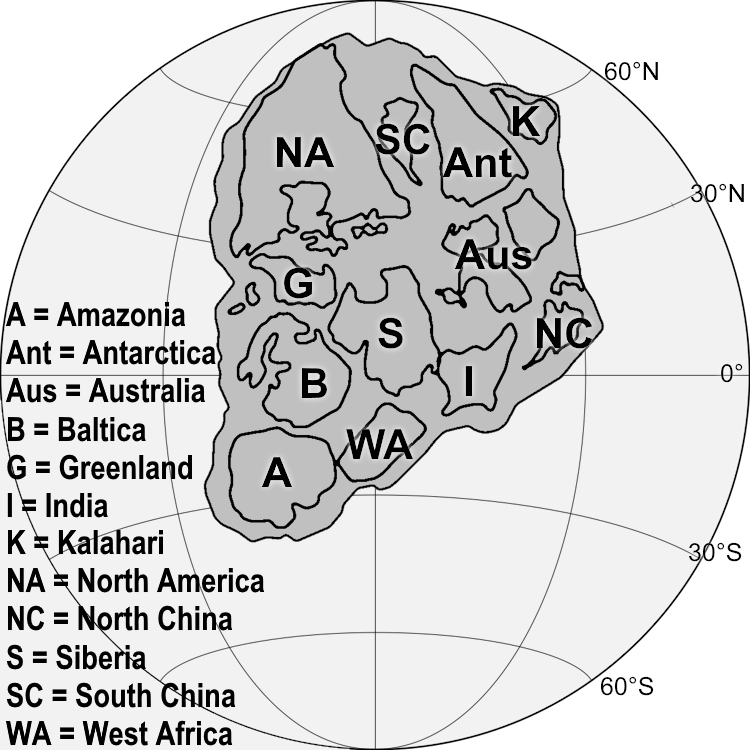
Figure A2‑3:A possible configuration of Columbia. [Adapted from Erlend Bjørtvedt]
Columbia's formation was a direct result of long-term plate tectonic processes and continental collisions. It persisted for several hundred million years before breaking apart due to the same tectonic forces that created it.
5. Rodinia (1.1 to 0.75 billion years ago)
Rodinia followed Columbia and is one of better-understood supercontinents , existing from roughly 1.1 billion to 750 million years ago. Rodinia's assembly centred around the equator and brought together most of Earth's continents, including the precursors to North America, Europe, and Asia.
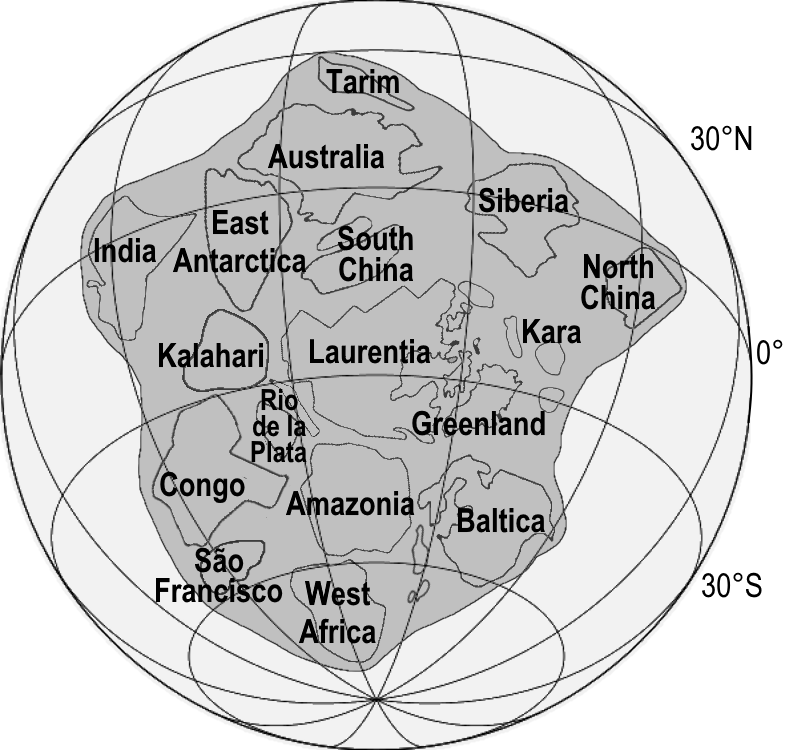
Figure A2‑4:How Rodinia may have looked. [Based on reconstruction of Li et al. (2008)]
The break-up of Rodinia is linked to significant geological and climatic changes, such as the Cryogenian glaciations, which may have plunged the planet into a "Snowball Earth" phase, during which ice covered much of its surface.
6. Pannotia (633 to 573 million years ago)
After Rodinia's break-up, the continents reassembled into a short-lived supercontinent, Pannotia. It existed from 633 to 573 million years ago, just before the Cambrian Explosion, when life began to rapidly diversify. Pannotia consisted of Laurentia (North America), Baltica (Europe), and Gondwana (which included South America, Africa, Antarctica, India, and Australia) and formed a V-shape in the Southern Hemisphere.
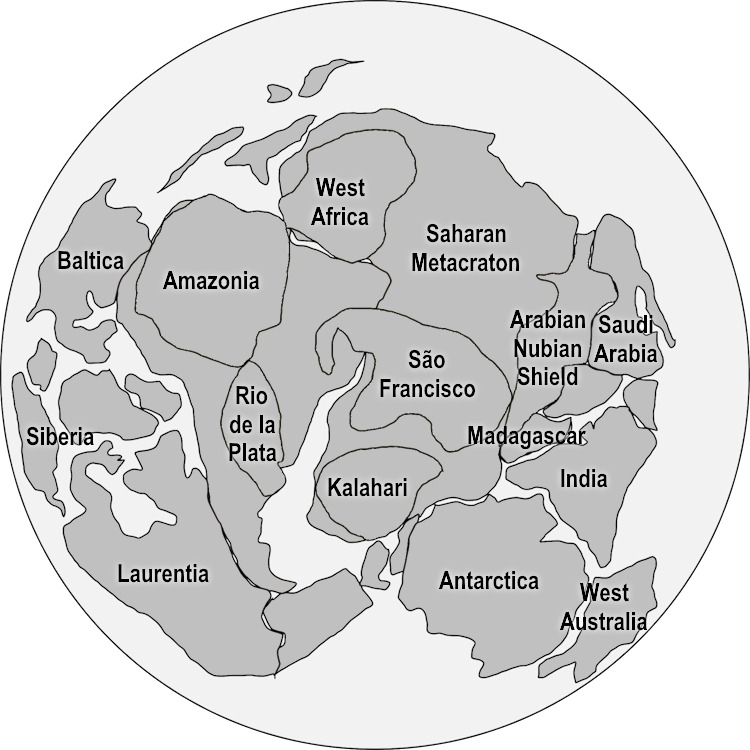
Figure A2‑5:Pannotia looking at the South Pole [Adapted from original by I.W.Dalziel]
Pannotia is notable for marking the transition from Precambrian geology to the more familiar Phanerozoic Eon. The break-up of Pannotia into smaller continents like Gondwana and Laurentia set the stage for the evolution of life and further supercontinent cycles.
7. Gondwana (550 to 175 million years ago)
Although not a supercontinent by definition [1] , Gondwana was a significant component of both Pannotia and the later supercontinent of Pangaea. Formed around 550 million years ago, it was one of the dominant landmasses for hundreds of millions of years. Even after the break-up of Pangaea, Gondwana remained intact until about 170 million years ago. The eventual break-up of Gondwana resulted in the configuration of continents we recognise today and included the modern-day landmasses of South America, Africa, Antarctica, Australia, India, and Madagascar.
8. Laurasia (300 to 200 million years ago)
Again, not a supercontinent but worthy of mention, Laurasia formed as a counterpart to Gondwana during the assembly of Pangaea. It comprised the northern landmasses that now make up most of North America, Europe, and Asia. Laurasia remained a significant landmass through much of the Mesozoic era before it split into North America, Europe, and Asia (excluding India).
9. Pangaea (336 to 175 million years ago)
The most famous supercontinent is Pangaea, which existed from around 336 to 175 million years ago. Unlike earlier supercontinents, Pangaea united all of Earth's landmasses into one gigantic, unified continent stretching from pole to pole. Pangaea's existence during the late Paleozoic and early Mesozoic eras was a pivotal time in Earth's history, as it saw the dominance of reptiles, including the dinosaurs, and the formation of extensive coal deposits.
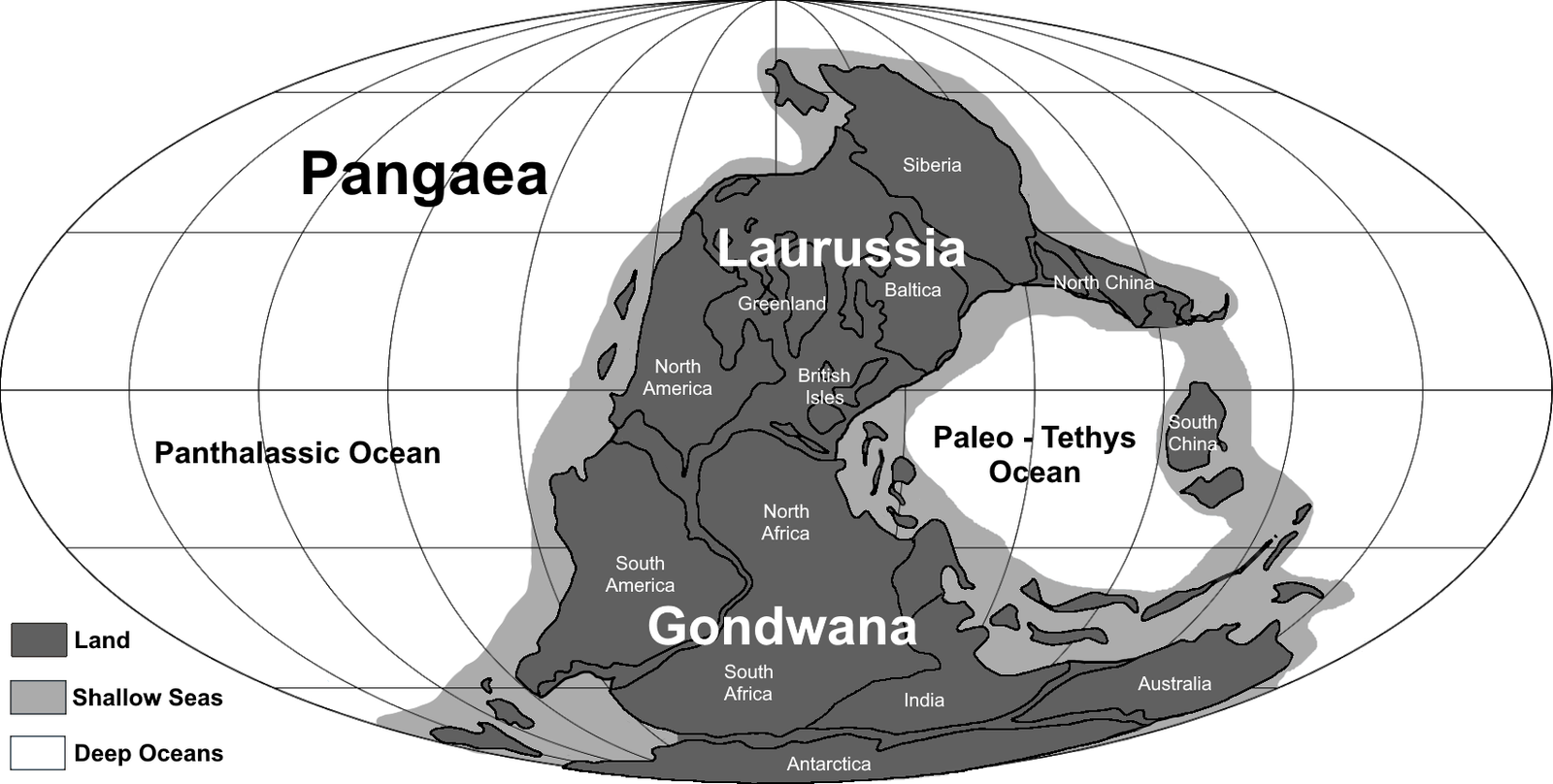
Figure A2‑6:Reconstruction of the supercontinent Pangaea. [Based on work by C.R. Scotese]
The break-up of Pangaea began during the Jurassic Period and led to the formation of the modern continents. This process continues today, with the Atlantic Ocean widening as Africa, Europe, and the Americas drift further apart.
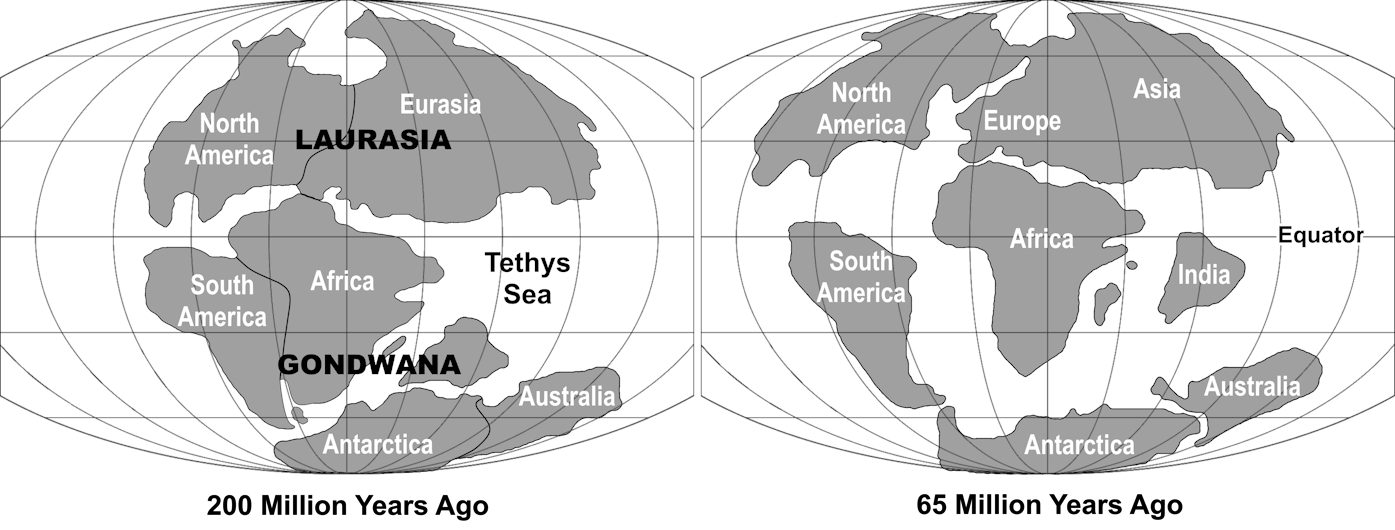
Figure A2‑7:The break-up of Pangaea into today's landmasses [USGS]
10. Future Supercontinents?
Geologists predict that the movement of tectonic plates will eventually lead to the formation of a new supercontinent. There are various models for this, with Pangaea Ultima, Novopangaea, Auricia, and Amasia being the most popular predictions. These models suggest that Earth's continents will likely converge again in the next 200 to 300 million years, potentially forming another supercontinent, though its configuration is still uncertain.
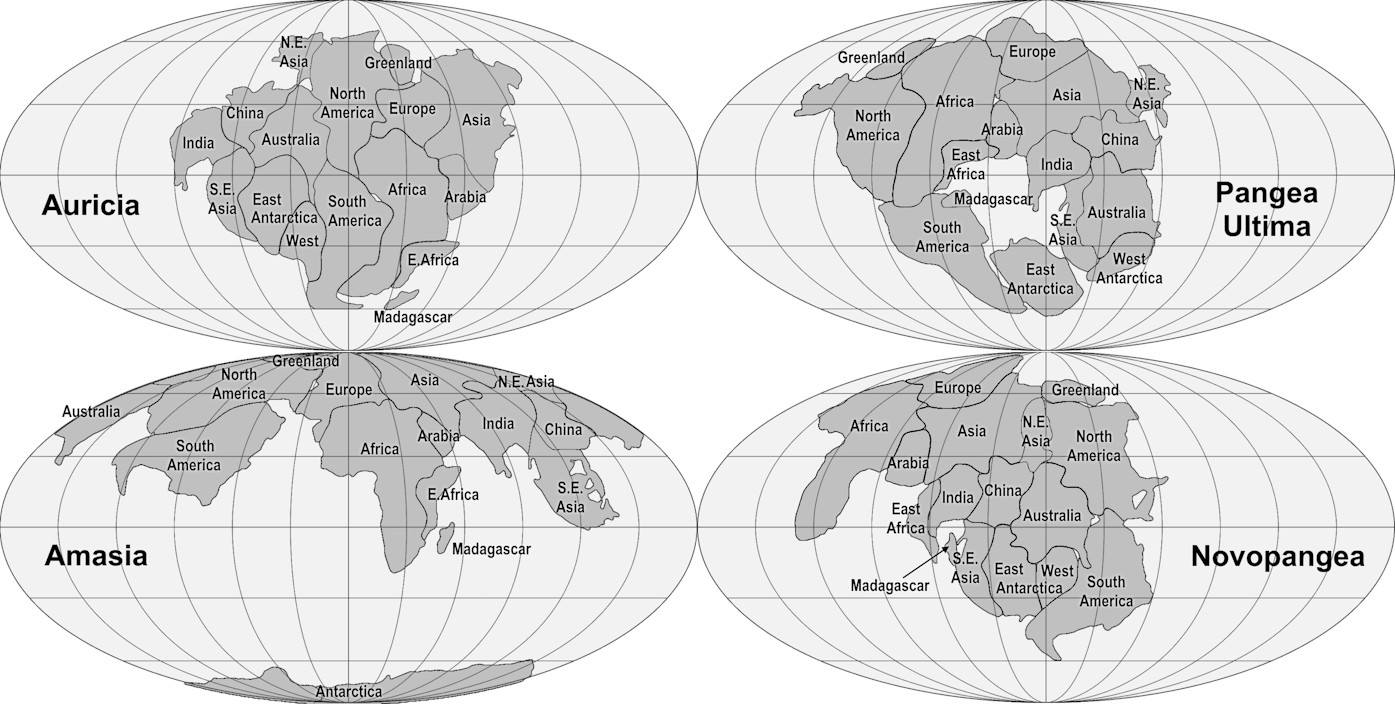
Figure A2‑8:Four possible future arrangements of the world's continents. [Adapted from originals by Hannah S. Davies, J.A. Mattias Green, and Joao C. Duarte (2018)]
The story of Earth's supercontinents is one of continuous formation and fragmentation driven by the forces of plate tectonics. Cratons serve as the ancient cores of continents, and their movements over billions of years have shaped the configuration of landmasses. From Vaalbara to Pangaea and beyond, Earth's supercontinents have played a crucial role in shaping the geological and biological evolution of the planet. The cycle of supercontinents is ongoing, with the potential for future formations waiting to be written into Earth's history.
[Buy to read more.][1] Some define a supercontinent as a landmass that includes at least 75 per cent of Earth's continental crust, while others require it to encompass most or all of the known cratons.